Search the documentation
Enter at least 2 characters
Enter at least 2 characters
 |
CAE Fidesys 9.0 Documentation |
Acceleration is the second derivative of time travel. Thus, the application of this boundary condition is possible in problems of time and harmonic analysis. Therefore, the effect of this boundary condition, if its value is constant, at time t will provide the velocity V=at and the displacement S=at2/2 of the object to which it is attached.
Beam model, fixing (sealing) and acceleration (0.01 m/s2) at the ends. The finite element mesh is implemented with thickening near the acceleration application location. Solved the problem of beam oscillation under the influence of acceleration. The period under consideration time - 5 s . The beam model with a finite element grid is shown on figure 3.
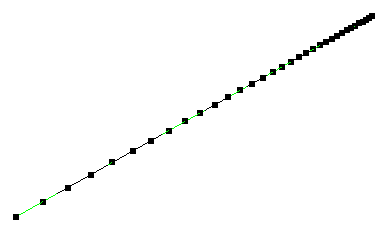
Figure 3 - Model
Figure 4 shows the complete displacements at time t in increments of 1 s.
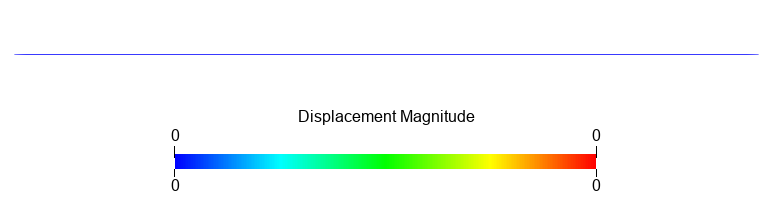
t=0
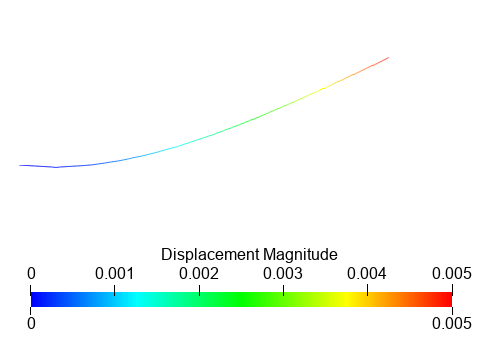
t=1
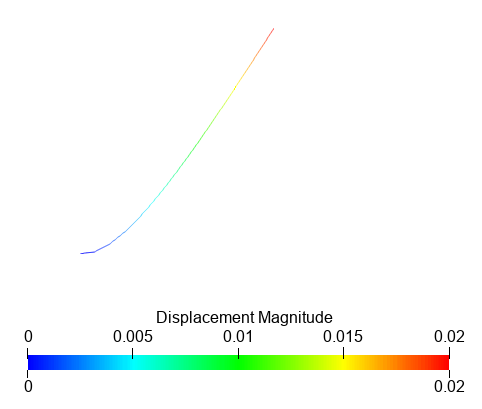
t=2
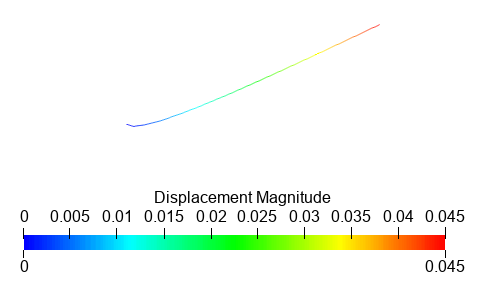
t=3
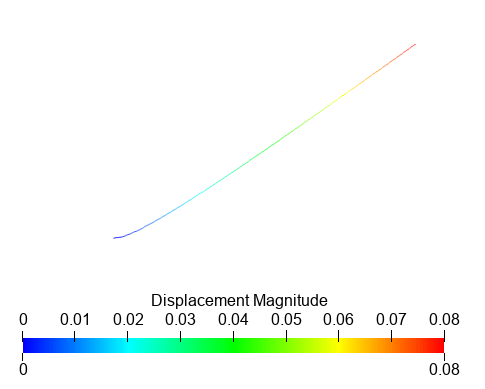
t=4
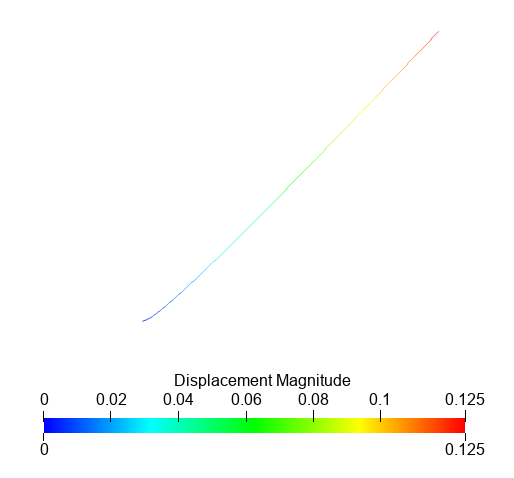
t=5
Figure 4 - Complete beam movements at time t
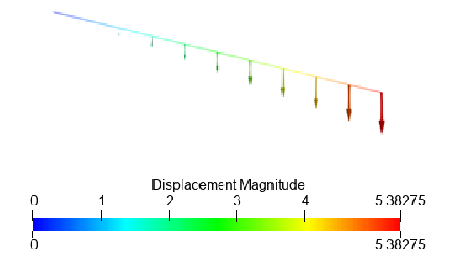
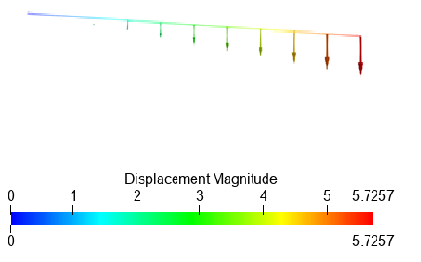
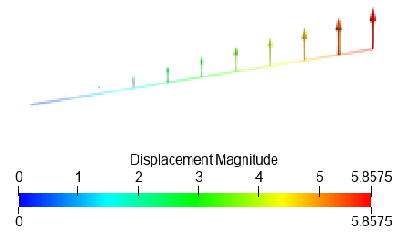
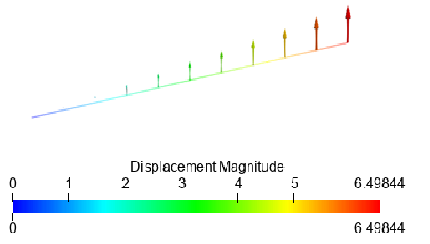
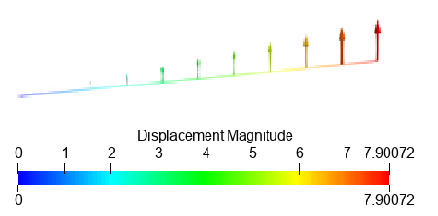
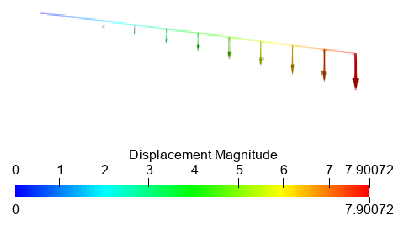
Fixing on the left end along all linear degrees of freedom, angles the turns are released. Acceleration is applied on the right end, depending on time according to the formula sin(t) (Figure 5). Complete movements at a time t are shown in Figure 6.
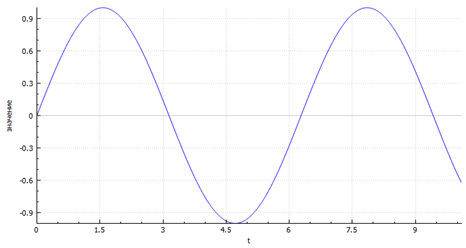
Figure 5 - Time dependence of acceleration
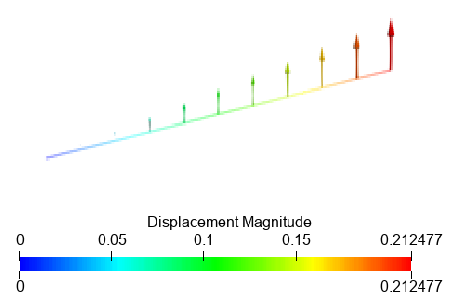
t=0
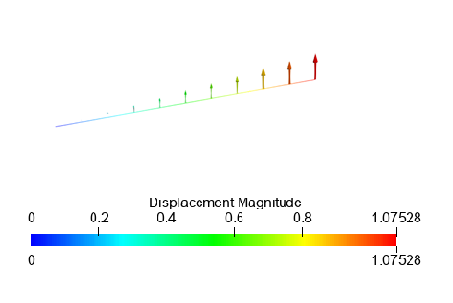
t=1
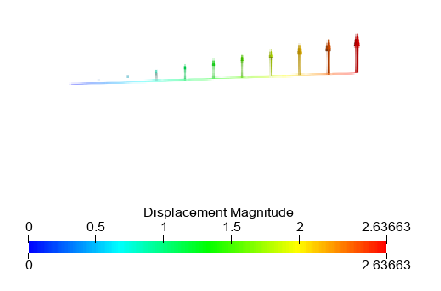
t=2
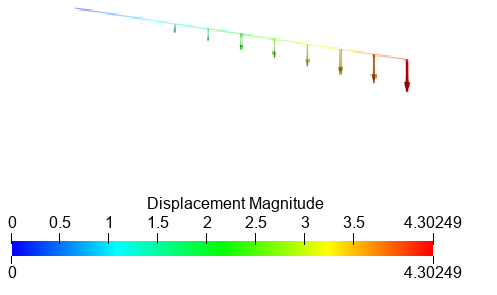
t=3
t=4
t=5
t=6
t=7
t=8
t=9
t=10
Figure 6 - Complete movements at time t